


Urethral Stricture in Men: Causes, Symptoms & Treatment

What Is a Urethral Stricture?
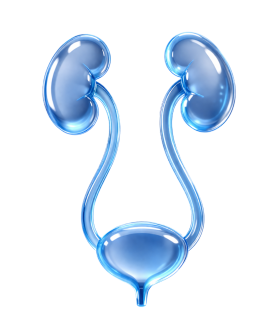
A urethral stricture is a scar-related narrowing of the urethra, the tube that carries urine from the bladder. When scar tissue forms and contracts, the urethral opening becomes narrower and urinary flow is restricted.
Severity depends on the stricture’s location, length, amount of scar tissue, and whether it is a first-time or recurrent stricture. A mild stricture may only weaken the stream slightly, while a severe one can make urination extremely difficult or impossible.
Causes
Strictures most often develop from scarring or inflammation. Possible causes include:
- catheterization, cystoscopy, or other urethral procedures
- pelvic or perineal injury
- inflammation or infection, including some STIs
- previous urinary or prostate surgery
- pelvic radiation therapy
- lichen sclerosus
Sometimes no clear cause is found — these are called idiopathic strictures. Strictures can occur in younger men too, not only older men.
Symptoms
Common symptoms include a weak or narrow stream, difficulty starting urination, straining, a stream that stops and starts or sprays, a feeling of incomplete emptying, frequent urination, pain or burning, recurrent urinary infections, and sometimes blood in the urine.
A weak stream alone doesn’t confirm a stricture — BPH, prostatitis, and other bladder problems can cause similar symptoms.
Diagnosis
A doctor takes a history (prior procedures, trauma, infections, retention episodes) and may order uroflowmetry (flow rate), post-void residual measurement (ultrasound), retrograde urethrography (contrast X-ray to locate and measure the stricture), and cystoscopy (camera exam of the urethra and bladder). Urine testing is done if infection or blood is suspected.
Treatment
Treatment depends on location, length, severity, cause, and recurrence history:
- urethral dilatation — gradually widening the narrowed section
- direct vision internal urethrotomy (DVIU) — an endoscopic incision of the scar
- urethroplasty — reconstructive surgery removing the scar or using a tissue graft (e.g., buccal mucosa)
- drug-coated balloon treatment in selected patients
For recurrent strictures, urethroplasty offers a more durable result than repeated endoscopic procedures.
Complications and When to See a Urologist
A stricture can recur even after successful treatment, so follow-up matters. Left untreated, complications can include worsening urinary retention (in severe cases, complete inability to urinate), recurrent infections, bladder stones, and upper urinary tract damage.
See a urologist for a persistent weak stream, difficulty starting, spraying, incomplete emptying, recurrent infections, pain, or blood in the urine — especially with a history of urethral injury or catheterization. Seek urgent care if you suddenly cannot urinate.