


Penile Denervation for Premature Ejaculation
-

Microsurgery
-
Anesthesia
-
Laser technology
-
Cosmetic sutures


About the condition
Premature ejaculation is the most common male sexual dysfunction: depending on the source, between 20% and 30% of men experience it at some point in their lives. The condition is diagnosed when ejaculation consistently occurs sooner than desired, the man is unable to control it, and this causes significant distress for him or his partner.
One possible cause is increased sensitivity of the glans penis, related to the pattern of innervation — a greater number or higher activity of sensory nerve endings. Selective denervation may be considered in exactly these cases.
Penile denervation is a modern microsurgical procedure aimed at reducing excessive sensitivity and improving control during intercourse. The method is used primarily in the treatment of premature ejaculation and helps improve both the quality of intimate life and the patient’s psychological comfort.
Main symptoms
- Ejaculation occurs within the first minute or considerably sooner than desired
- Increased sensitivity of the glans penis
- Reduced control during intercourse
- Inability to delay ejaculation voluntarily
- Psychological discomfort, anxiety before intimacy and loss of confidence
- Avoidance of intimate relationships and tension within the couple
It is important to distinguish two forms: lifelong (present since the beginning of sexual activity) and acquired (developed later, against the background of another condition — for example prostatitis, thyroid disorders or erectile dysfunction). Treatment strategies for these two forms differ.
Assessment before treatment
Surgery is never the first step. Before a decision is made, the following are carried out:
- A detailed interview — clarifying how long the problem has existed, its form (lifelong or acquired), the approximate time to ejaculation, the degree of control and the impact on quality of life;
- Urological examination — ruling out inflammatory conditions, a short frenulum and phimosis;
- Assessment of glans sensitivity;
- Testing for infections and prostate ultrasound — chronic prostatitis is a frequent cause of the acquired form;
- Hormonal evaluation — testosterone and TSH, since thyroid disorders may present as premature ejaculation;
- Assessment of erectile function — premature ejaculation is sometimes a consequence of erectile dysfunction.
If a treatable cause is identified, treatment begins there.
What is tried before surgery
International guidance holds that surgical treatment should only be considered after conservative methods have failed:
- Behavioural techniques — the stop–start and squeeze methods, worked on as a couple;
- Topical anaesthetics — creams and sprays that reduce glans sensitivity;
- Medical therapy — medication prescribed by a doctor where indicated;
- Treatment of associated conditions — prostatitis, hormonal disorders, erectile dysfunction;
- Work with a psychologist or sex therapist — where anxiety is a significant component.
If these approaches prove ineffective and sensitivity is objectively increased, the doctor may propose a surgical option and discuss its possibilities and limitations with the patient in detail.
Why patients choose denervation
Denervation offers a modern surgical option for men for whom conservative treatment has not worked. Unlike creams and tablets, which must be used before every act of intercourse, the procedure aims to produce a lasting change in the level of sensitivity.
The procedure is performed using precise microsurgical techniques and is tailored to each patient’s individual needs. Every treatment plan is based on a thorough medical assessment, which makes it possible to select the most appropriate approach.
One point deserves emphasis: denervation affects sensitivity, but not psychological factors. Where anxiety plays a significant role, the best outcome is achieved by combining surgery with work on the psychological component.
Preparing for the procedure
Preparation includes:
- general blood and urine tests, coagulation profile and screening for infections;
- treatment of any existing inflammatory conditions of the genitourinary tract before surgery;
- consultation with an anaesthetist;
- discontinuation of medication affecting blood clotting, as agreed with the doctor;
- avoiding smoking and alcohol before the procedure;
- hygienic preparation of the surgical area;
- no food or drink for 8 hours before the procedure if general anaesthesia is planned.
A separate part of the preparation is the conversation about the expected outcome: the doctor explains what change in control can realistically be expected and in which cases additional therapy may be required.
How the procedure is performed
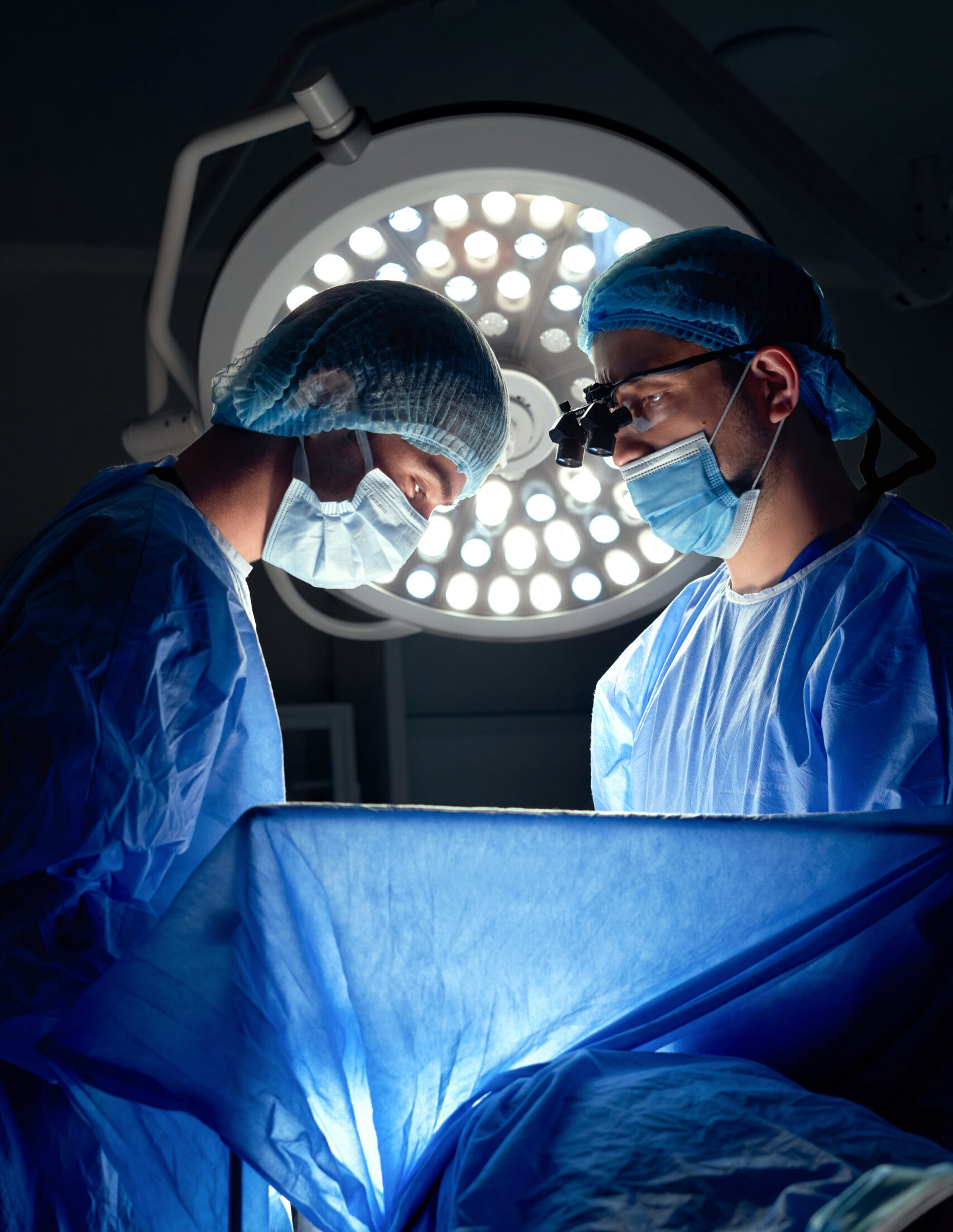
The procedure is carried out under appropriate anaesthesia — local with sedation, or general — and takes on average 1 to 2 hours:
- A small incision is made in the coronal sulcus area, beneath the glans, which keeps the resulting scar inconspicuous.
- Under the operating microscope, the surgeon identifies the branches of the dorsal nerve of the penis.
- A proportion of the sensory branches is selectively divided, while the nerves responsible for erection and the blood vessels are preserved. This selectivity is fundamental: the aim is to reduce excessive sensitivity, not to remove sensation altogether.
- The wound is closed with a cosmetic suture.
Following a detailed evaluation, every procedure is individually planned according to the patient’s condition and treatment goals. In most cases the patient is discharged on the day of surgery.
Recovery
Recovery varies from patient to patient. Approximate timeframes are:
- Days 1–3 — moderate swelling and discomfort, controlled with prescribed medication;
- Days 5–7 — return to normal daily activity and work;
- 2–4 weeks — abstinence from sexual activity;
- 1–3 months — the adaptation period, during which the new level of sensitivity settles; assessing the result earlier is not meaningful.
Most patients can gradually return to their normal daily activities by following their doctor’s recommendations. Personalised postoperative instructions and follow-up appointments are provided to support proper healing and recovery.
Possible risks and contraindications
As with any intervention, denervation carries risks: excessive reduction in sensitivity, which may make reaching orgasm more difficult; temporary numbness of the glans; haematoma or swelling; infection; scar formation; and partial return of the previous level of sensitivity over time through natural regeneration of nerve fibres. The selective technique performed under the microscope reduces the likelihood of these complications.
The procedure is not performed in the presence of acute inflammatory conditions of the genitourinary tract, bleeding disorders, uncontrolled diabetes, untreated erectile dysfunction, or acquired premature ejaculation whose underlying cause has not been addressed. It is also not appropriate where the problem is clearly psychogenic in nature, in which case working with a psychologist will be more effective.
Frequently asked questions
Will I lose sensation completely?
No. The aim of the procedure is to reduce excessive sensitivity while preserving normal sensation. Only selected sensory branches are divided.
Does the procedure affect erection?
The nerves and vessels responsible for erection are preserved when the technique is performed correctly.
When will the result be apparent?
The final result is assessed after 1 to 3 months, once the adaptation period is complete.
Can the problem return?
Sensitivity may partially recover over time through regeneration of nerve fibres.
Do I have to try tablets and creams first?
Yes. Surgical treatment is considered only when conservative methods have proved ineffective.
When can I resume sexual activity?
Usually after 3 to 4 weeks, following examination and clearance by the doctor.
Treatment cost
-
01.
One-time procedure
The final cost depends on the selected treatment method, the complexity of the procedure, and the patient's individual condition.10 000 000 UZS